Building a Home of Mercy: How to Strengthen Your Married Life in Islam
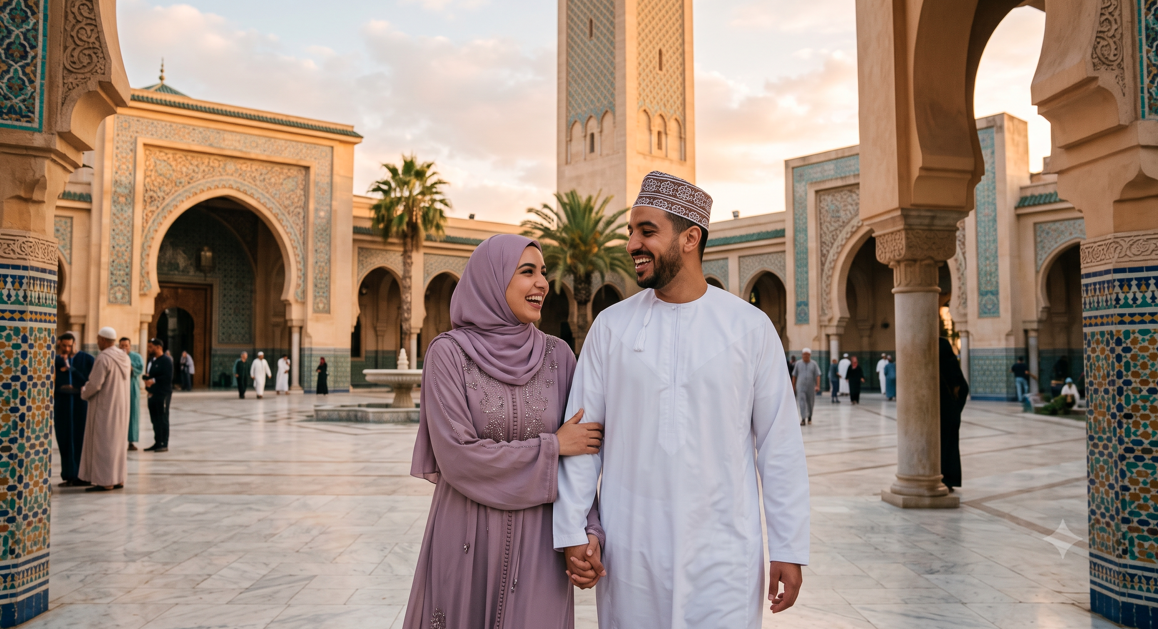
A nikah is not the finish line. It is the opening of a long road that two believers walk together, hoping to arrive at Jannah side by side. Many couples enter marriage with sincere intentions and yet find themselves, a few years in, tired, misunderstood or quietly distant. The good news is that Islam did not leave us to guess our way through this. Our Prophet صلى الله عليه وسلم was a husband before he was anything else in his household, and his example is astonishingly practical.
Here are habits, drawn from the Qur'an and authentic Sunnah, that turn an ordinary marriage into a home of tranquillity.
1. Remember what your marriage is for
Allah described marriage not as a contract of convenience but as a sign of His mercy:
"And among His signs is that He created for you spouses from among yourselves, so that you may find tranquillity in them; and He has placed between you affection and mercy." (Qur'an, Surah ar-Rum 30:21)
Notice the two words: affection and mercy. Affection is what most couples begin with. Mercy is what carries them through illness, debt, difficult in-laws, sleepless nights with a newborn and the ordinary friction of two imperfect people sharing one kitchen. Renew your intention often: I am married for the pleasure of Allah, and I will be judged on how I treated this person. That single thought has repaired more marriages than any clever advice.
2. Make good character your first priority
We often measure ourselves as spouses by what we provide, income, housework, a tidy home, hospitality to guests. The Prophet صلى الله عليه وسلم measured something else:
"The most complete of the believers in faith are those with the best character, and the best of you are those who are best to their wives." (Reported by at-Tirmidhi, graded hasan sahih)
Character at home means the tone you use when you are tired. It means not raising your voice, not mocking, not bringing up old mistakes as ammunition, not punishing with silence. A man may be respected in the masjid and harsh behind his front door; a woman may be gracious with guests and cutting with her husband. Allah sees both rooms.
And when we feel our patience thinning, recall that he صلى الله عليه وسلم said: "Allah is Gentle and loves gentleness in all matters." (Reported by Muslim)
3. Learn to overlook, and to say thank you
No spouse will meet every hope you carried into marriage. The Prophet صلى الله عليه وسلم gave the antidote to the resentment that grows from unmet expectations:
"A believing man should not hate a believing woman. If he dislikes one of her characteristics, he will be pleased with another." (Reported by Muslim)
Train your eye to look for the second quality. Then say it aloud. Gratitude that stays inside the heart does nothing for a marriage. He صلى الله عليه وسلم said: "Whoever is not grateful to people is not grateful to Allah." (Reported by at-Tirmidhi)
- Thank your wife specifically, not generally, for the meal, for managing the children's routine, for her patience with your family.
- Thank your husband for the work he does that you do not see.
- Let small faults go unmentioned. Not every irritation needs a conversation.
4. Serve one another without keeping score
When 'Aishah رضي الله عنها was asked what the Prophet صلى الله عليه وسلم used to do in his home, she described a man who mended his own sandals, patched his garment and helped in the house like any other person. (Reported by Ahmad) The greatest of creation was not too important to be useful at home.
Marriages sour quickly when both partners become accountants, tallying who did more this week. Islam asks something more generous: give without invoicing. Do the task nobody wants to do. Bring something home without being asked. Small, unrequired kindnesses are the currency of long love.
5. Handle conflict like believers, not opponents
Disagreement is not a sign of a failing marriage. How we disagree is the real test. A few Prophetic principles:
- Do not fight to win. The aim is understanding, not victory. A spouse who "wins" every argument is slowly losing a marriage.
- Choose your moment. Serious matters raised at midnight, in front of children, or over a text message rarely end well.
- Guard your tongue from the unforgivable. Words about a person's family, appearance or worth are remembered for decades. Anger passes; sentences do not.
- Repair quickly. Do not let a night pass with the heart closed. Be the first to soften.
If a matter is too heavy to resolve alone, the Qur'an itself points towards trusted arbitration from both families rather than escalation or estrangement (see Surah an-Nisa 4:35). Choose a mature, God-fearing elder or a knowledgeable person known for discretion, not the relative most likely to take a side.
6. Protect your marriage's privacy
One of the quietest destroyers of marriages in our time is exposure. A frustration shared with a group chat becomes a permanent judgement on your spouse. A complaint posted online invites a hundred strangers into a room where only two people belong. And a marriage displayed for admiration online often carries a private ache nobody sees.
Allah described spouses as "a garment for one another" (Qur'an, Surah al-Baqarah 2:187), a covering, a protection, something close to the skin. Cover your spouse's faults as you would want yours covered on the Day when everything is uncovered. Seeking sincere counsel from a wise, trustworthy person when you genuinely need help is different from broadcasting; know which one you are doing.
7. Worship together, not just alongside each other
Two people can share a home for twenty years and never once share a moment before Allah. Yet spiritual companionship is the strongest bond a couple can build, because it is the only one that survives death.
"May Allah have mercy on a man who wakes at night, prays, and wakes his wife; and if she refuses, he sprinkles water on her face. And may Allah have mercy on a woman who wakes at night, prays, and wakes her husband..." (Reported by Abu Dawud and an-Nasa'i)
Begin somewhere small and sustainable:
- Pray at least one salah together each day, with one of you leading.
- Read a few verses with a short tafsir over tea once a week.
- Give charity together, even a modest amount, and let it be your shared secret.
- Fast a Monday together. Attend a class together. Learn something neither of you knew.
A home in which Allah is remembered is a home in which blessing settles.
8. Honour each other's families without losing your marriage
In our communities, marriage joins households, not just individuals, and this is a mercy when handled with wisdom. Serve your parents and in-laws with excellence and speak well of them. At the same time, remember that Allah has made you and your spouse a unit with its own trust: your private matters, decisions and difficulties belong first between the two of you and your Lord.
Never allow anyone to speak ill of your spouse in your presence, and never make your spouse choose between loyalty to you and honouring their parents. Wise boundaries, set kindly and early, prevent years of resentment.
9. Keep asking Allah
The hearts are between His fingers; He turns them as He wills. No technique replaces sincere du'a for your spouse, and for yourself, that you may be easier to live with.
"Our Lord, grant us from among our spouses and offspring comfort to our eyes, and make us leaders of the righteous." (Qur'an, Surah al-Furqan 25:74)
Say it after every salah. Ask for your spouse when they are difficult, not only when they are lovely. Ask for guidance in the years you cannot yet see.
A final word
Marriage in Islam is not a search for a flawless partner; it is a lifelong act of worship performed with an imperfect one, by two people who are both imperfect. Mercy given today returns tomorrow. Faults overlooked today are faults overlooked for you.
If you are still searching for that companion, search with the same sincerity you hope to bring to the marriage itself, with modesty, with your family and Wali involved, with your intention clear before Allah. And if you are already married, know that the work begins now, in small daily kindnesses, and that Allah does not waste any of it.
May Allah place affection and mercy between our hearts, and gather us with our families in the highest gardens. Ameen.